

Listen to this article
AI narration • 16:36 listen
0:00 / 16:36
Sheet metal cost calculation adds up six things for each part: the material in the blank less the scrap you sell back, the machine time to cut and bend it, the setup spread over the batch, the tooling share, finishing, and then overheads and profit. The result is the price a supplier should be able to meet. If a quote is far above it, you know which lines to ask about.
This guide works through one laser cut and bent bracket in rupees, line by line. It shows how to get the blank weight, why material utilisation moves the price more than most buyers expect, and what to check before you accept a supplier's sheet metal quote. It ends with how Cost It Right keeps all of this in one costing sheet.
See sheet metal inside your part cost. Book a demo and bring one sheet metal part you buy today. See its cost breakup next to your supplier's quote in Cost It Right. Book a Cost It Right demo or see how the product works.
What does a sheet metal part cost break down into?
A sheet metal part cost breaks down into eleven lines, and for a laser cut and bent part the machine time is usually bigger than the material. In the example later in this guide, laser cutting is 26.9% of the cost and net material is 21.7%. Knowing the split shows you where a supplier has room to move and where they do not.
Cost line | Rs per piece | Share of should-cost |
|---|---|---|
Laser cutting | 10.00 | 26.9% |
Net material | 8.09 | 21.7% |
Powder coating | 4.50 | 12.1% |
Bending | 3.33 | 9.0% |
Profit | 2.76 | 7.4% |
Overheads | 2.51 | 6.7% |
Labour | 2.29 | 6.2% |
Packing and freight | 1.50 | 4.0% |
Tooling share | 0.80 | 2.2% |
Setup share | 0.75 | 2.0% |
Deburring | 0.67 | 1.8% |
Should-cost | 37.20 | 100% |
The split changes with the part. A thin, simple part makes material the biggest line. A part with many holes and bends makes machine time the biggest line. That is why a rule of thumb such as "material is 60% of the price" misleads on fabricated parts.
How do you calculate sheet metal part cost?
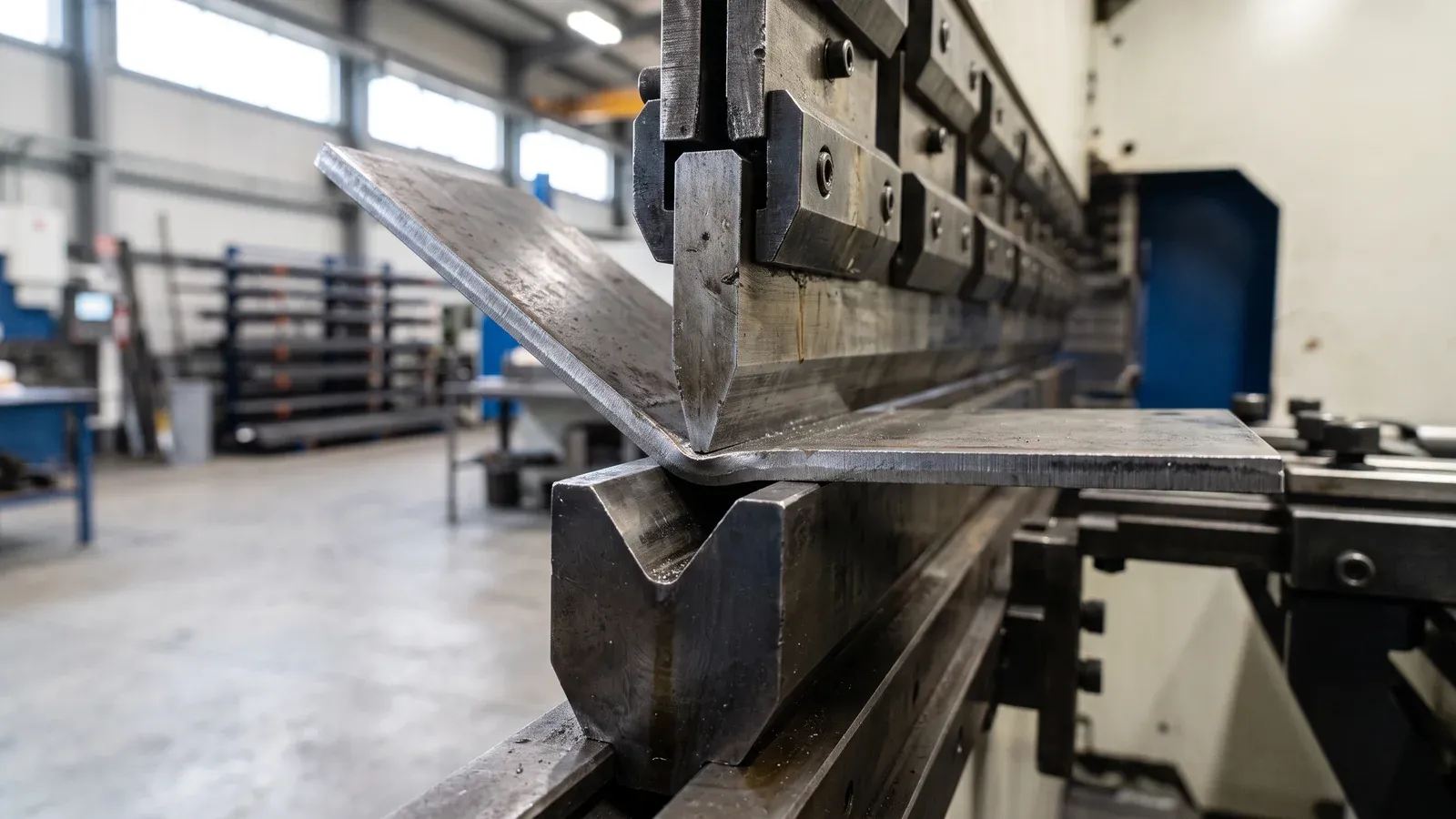
Start with the part, then price each step it goes through:
Sheet metal part cost = net material + cutting and bending (machine and labour) + setup share + tooling share + surface treatment + overheads + packing and freight + profit
Each line comes from a number you can check. Material comes from the blank size, thickness, density and the rate per kilogram. Machine cost comes from the time on each machine multiplied by its machine hour rate. See our machine hour rate guide for how to get that rate. The same method, for any part, is in our manufacturing cost breakdown guide.
How do you calculate blank size, weight and bend allowance?
Blank weight is the strip length times width times thickness times density. For a bent part, first find the flat length by adding the straight sections to the bend allowance of each bend, then add the gap your supplier needs between parts on the sheet. The strip you pay for is larger than the flat part.
Density decides the weight for the same size. These are standard values:
Material | Density (g/cm3) |
|---|---|
Mild steel and galvanised steel | 7.85 |
Stainless steel 304 | 7.93 |
Aluminium | 2.70 |
Brass | 8.50 |
Copper | 8.96 |
Weight in kilograms = length (mm) x width (mm) x thickness (mm) x density (g/cm3) / 1,000,000.
For the 130 x 90 x 1.5 mm strip in steel, that is 130 x 90 x 1.5 x 7.85 / 1,000,000 = 0.138 kg.
Bend allowance is the length of material a bend uses up. The usual formula is:
Bend allowance = (bend angle x 3.1416 / 180) x (inside radius + K-factor x thickness)
The K-factor depends on the material, the tooling and the bend radius, and it commonly falls between 0.33 and 0.5. For a 90 degree bend with a 1.5 mm inside radius, 1.5 mm thickness and a K-factor of 0.44, the allowance is 1.5708 x (1.5 + 0.44 x 1.5) = 3.39 mm. Ask your supplier which K-factor they use, because it changes the flat length and so the blank weight.
What is a worked example of sheet metal cost calculation?
Here is an illustrative example with made-up but realistic inputs, for a mild steel bracket made by laser cutting, bending on a press brake, deburring and powder coating.
Input | Value |
|---|---|
Material | CRCA mild steel, 1.5 mm thick, density 7.85 g/cm3 |
Part size | 120 mm x 80 mm, net weight 0.095 kg after cut-outs |
Strip allowed per part | 130 mm x 90 mm, which includes the gaps between parts |
Material rate | Rs 68 per kg, scrap credit Rs 30 per kg |
Batch size | 2,000 pieces |
Step 1. Blank weight. The strip used per part is 130 x 90 x 1.5 mm, which is 17,550 mm3 or 17.55 cm3. At 7.85 g/cm3 that is about 138 g, or 0.138 kg. The part itself weighs 0.095 kg, so 0.043 kg goes to scrap.
Step 2. Utilisation. 0.095 / 0.138 = 68.8%. This is the share of the sheet that ends up in the part.
Step 3. Material cost. 0.138 kg x Rs 68 = Rs 9.38. Scrap credit is 0.043 kg x Rs 30 = Rs 1.29. Net material is Rs 8.09.
Step 4. Cutting time. The laser path is about 500 mm: 400 mm of outer edge plus four holes of 8 mm diameter, about 100 mm. At 5,000 mm per minute that is 6 seconds. Add 5 pierces at 1 second each and 4 seconds to load and unload, and the laser time is 15 seconds.
Step 5. Everything else. Bending takes 10 seconds on the press brake for 2 bends. Deburring takes 8 seconds by hand. Setup takes 50 minutes (20 on the laser and 30 on the press brake) and costs Rs 1,500 over the batch of 2,000. The bending fixture costs Rs 40,000 over 50,000 pieces.
Cost element | How it is worked out | Rs per piece |
|---|---|---|
Net material | Rs 9.38 gross less Rs 1.29 scrap credit | 8.09 |
Laser cutting | 15 s at Rs 2,400 per hour | 10.00 |
Bending | 10 s at Rs 1,200 per hour | 3.33 |
Deburring | 8 s at Rs 300 per hour | 0.67 |
Labour | 33 s in total at Rs 250 per hour | 2.29 |
Setup share | Rs 1,500 / 2,000 pieces | 0.75 |
Overheads | 10% of the five lines above | 2.51 |
Tooling share | Rs 40,000 / 50,000 pieces | 0.80 |
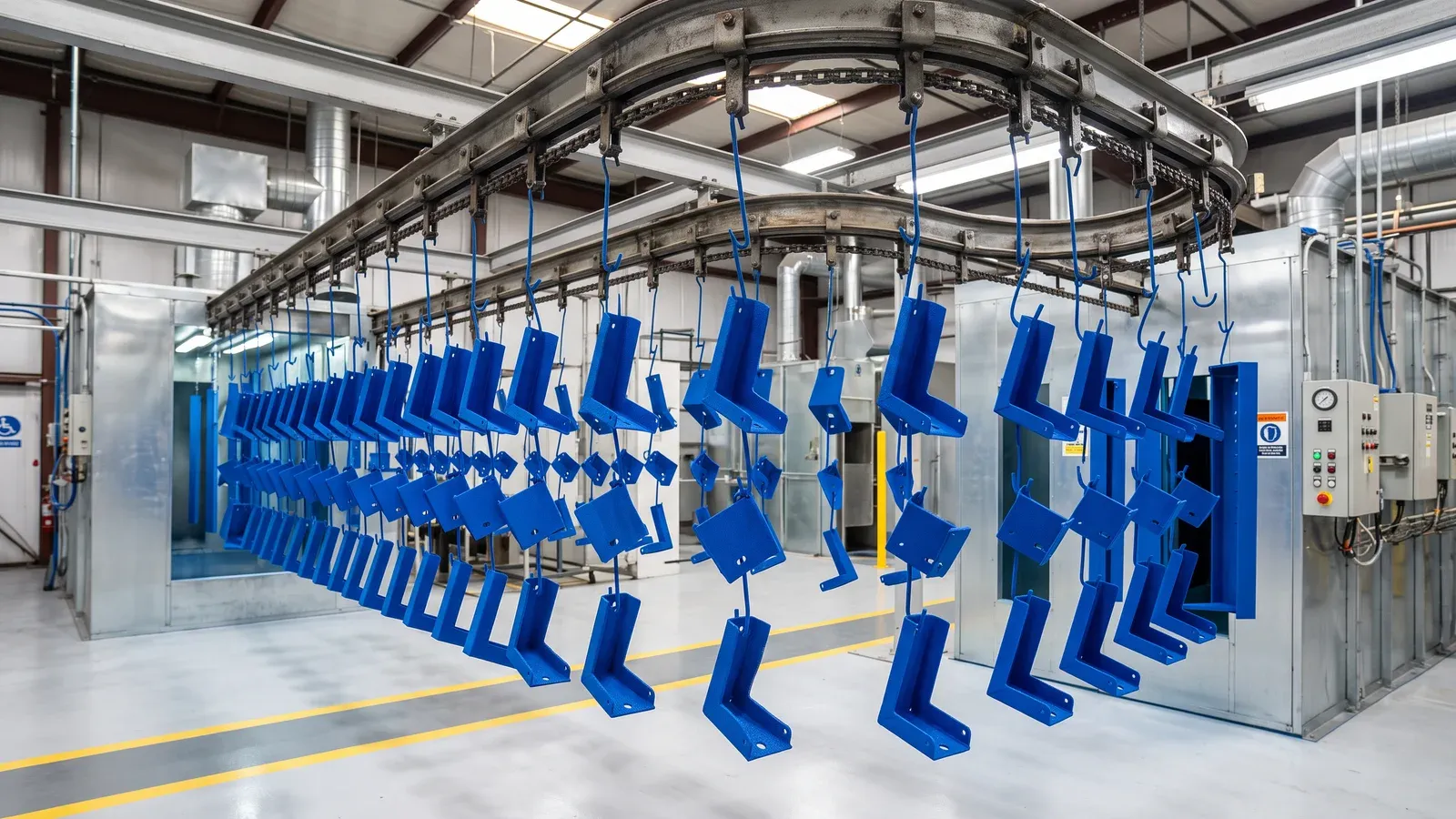
Powder coating | Per piece | 4.50 |
Packing and freight | Per piece | 1.50 |
Profit | 8% of the lines above | 2.76 |
Should-cost | 37.20 |
Say a supplier quotes Rs 43.00. The gap is Rs 5.80, or about 15.6% above should-cost. That does not prove the supplier is overcharging. It tells you where to ask: the utilisation they assumed, the laser rate, the overhead and profit rates, and whether the finishing line matches your drawing. Our guide to supplier quote vs should-cost shows how to test each line.
Why does material utilisation matter so much?
Material is the biggest line, and utilisation decides how much of it you pay for. In the example, only 68.8% of the sheet ends up in the part. If better nesting lifts utilisation to 75%, the strip per part falls to about 0.127 kg and net material drops from Rs 8.09 to Rs 7.66. That is a saving of Rs 0.43 on material alone, before overheads and profit are applied.
Three things move utilisation: the shape of the part, how parts are nested on the sheet, and sheet size. Standard sheet sizes also create offcuts that a part-by-part view misses. Ask your supplier how they nested the part and which sheet size they used. Raw material rates also change often, so keep them current. See why raw material tracking matters.
Should you cost laser cutting, punching or a press tool?
The right cutting method depends on volume. Laser cutting needs no tool, so it suits low and medium volumes and frequent design changes. A progressive die costs a lot upfront but cuts the cost of each piece sharply at high volume. Costing both and comparing them at your volume is the only reliable way to choose.
Method | Tooling cost | Best for | What drives the piece cost |
|---|---|---|---|
Laser cutting | None | Low to medium volume, many designs | Cutting path, pierces, machine hour rate |
Turret punching | Tool library, little per part | Parts with many holes and standard shapes | Hits per part, machine hour rate |
Press tool (progressive die) | High, shared over the volume | High volume, stable design | Strokes per minute, tool amortisation |
Plasma or waterjet | None | Thick plate and special materials | Cutting speed, consumables |
Here is a simple break-even, using made-up numbers. Laser cutting the bracket blank costs Rs 10.00 per piece. A press tool cuts and pierces the same blank for Rs 4.00 per piece but costs Rs 4,00,000. The saving is Rs 6.00 per piece, so the tool pays back at Rs 4,00,000 / Rs 6.00 = 66,667 pieces. Below that volume, laser is cheaper. Above it, the tool wins. Our guide to how to calculate tooling cost per piece shows how to spread the tool cost correctly.
How do thickness and batch size change sheet metal cost?
Thickness raises both weight and cutting time, and batch size spreads the fixed costs. Weight is directly proportional to thickness, so doubling the thickness doubles the material. Cutting also slows down on thicker sheet, so the machine line rises as well.
For the same 130 x 90 mm strip, 3 mm steel weighs about 0.276 kg instead of 0.138 kg. At Rs 68 per kg the gross material goes from Rs 9.38 to Rs 18.74 per piece, before any extra cutting time.
Batch size works the other way. Setup is a fixed cost for the batch, so the setup share falls as the batch grows. Using the Rs 1,500 setup from the example:
Batch size (pieces) | Setup share per piece (Rs) |
|---|---|
500 | 3.00 |
1,000 | 1.50 |
2,000 | 0.75 |
5,000 | 0.30 |
10,000 | 0.15 |
This is why a small trial order often looks expensive per piece. Ask suppliers for quotes at two or three batch sizes so you can see where the price stops falling.
What should you check in a sheet metal quote?
Before you accept a sheet metal quote, check these seven things:
Blank size and weight. Does it match your drawing, thickness and density?
Utilisation. What percentage did the supplier assume, and how was the part nested?
Scrap credit. Is scrap sold back at a fair rate, or ignored?
Machine rates and times. Ask for the laser, press and brake rates, and the seconds per part.
Setup and batch size. The setup share falls as batch size rises.
Tooling. Is a die or fixture charged, and when does the charge end? See how to calculate tooling cost per piece.
Overheads, profit and finishing. Are they listed as separate lines, and do they match your terms?
For how to read a supplier's own breakup, see supplier cost breakdown analysis.
What mistakes make sheet metal costing wrong?
Most errors come from seven places, and each one moves the result by several percent:
Using the finished part weight as the material weight. You pay for the blank, not the part.
Ignoring nesting gaps. The strip per part is bigger than the flat size.
Forgetting the scrap credit. Scrap is sold back, so net material is lower than gross.
Using one machine rate for every operation. A laser, a press brake and a deburring bench have very different hourly rates.
Leaving out setup. On small batches it can be one of the larger lines.
Skipping handling and loading time. Cutting time alone understates the cycle.
Using last year's material rate. Sheet prices move, so update the rate before every costing.
A costing system fixes most of these by keeping rates, masters and formulas in one place.
How do you cost many sheet metal parts at once?
One bracket takes an hour to cost by hand. A product with hundreds of sheet metal parts takes weeks, and every change in material rate, machine rate or design means redoing it. That is why teams move costing into a system where rates, masters and cost breakups are linked.
Automotive buyers feel this most, because they manage many stamped and fabricated parts at tight cost-down targets. Our guide to auto component costing shows how those costs build up.
What can Cost It Right do for sheet metal costing?
Cost It Right is a costing and sourcing platform for manufacturers and procurement teams. For sheet metal and other parts it can:
Build the cost breakup of each part across 24+ manufacturing technologies, using your own machine hour rates, material rates, labour and overheads.
Keep masters in one place: machine hour rate masters, material masters and overhead rates, so every costing uses the same numbers.
Compare supplier quotes against should-cost, line by line, and rank suppliers on one data set.
Run RFQs for BOM, non-BOM, tooling, raw material and capex items, with a vendor portal and reverse auction.
Index raw material to LME rates and apply bulk price amendments when material cost moves.
Handle BOM change: BOM, graphical BOM, ECN, simulation and impact analysis to finished-goods level.
Track tooling with tool amortisation alerts, so a recovered tool leads to a price revision.
Control and report: multi-level approvals, audit trail, and cost variance, movement, ratio and spend reports.
Integrate: ERP, PLM and CAD integration, with an on-premise option.
Try it on your own part. Share one sheet metal part and your supplier's quote, and see the cost breakup side by side. Book a Cost It Right demo.
FAQs
How do you calculate sheet metal cost?
Add net material, machine and labour cost for cutting and bending, the setup and tooling shares, finishing, overheads and profit. Material comes from blank weight times rate, less scrap credit. Machine cost is time multiplied by machine hour rate. In our example the total is Rs 37.20 per piece.
How do you calculate the blank weight of a sheet metal part?
Multiply the strip length, width and thickness to get the volume, then multiply by the density. For mild steel the density is 7.85 g/cm3. A 130 x 90 x 1.5 mm strip is 17.55 cm3 and weighs about 138 g.
What is material utilisation in sheet metal?
Material utilisation is the part's net weight divided by the weight of sheet used for it. In our example it is 0.095 kg divided by 0.138 kg, or 68.8%. Higher utilisation means less scrap and lower material cost.
How is laser cutting cost per part calculated?
Add the cutting time (path length divided by speed), the pierce time and the loading time. Multiply the total by the machine hour rate. In our example, 15 seconds at Rs 2,400 per hour gives Rs 10.00 per part.
Does scrap have value in sheet metal costing?
Yes. Scrap is usually sold back at a lower rate than the sheet price. In our example, 0.043 kg of scrap at Rs 30 per kg gives a credit of Rs 1.29 per part, which brings net material down to Rs 8.09.
How does batch size change the cost per part?
Setup and tooling are fixed costs spread over the batch, so a larger batch lowers the cost per part. In our example the setup share is Rs 0.75 at 2,000 pieces and would be about Rs 0.30 at 5,000 pieces.
What overhead and profit should a sheet metal quote include?
They vary by supplier, plant and volume, so ask for both as separate lines instead of assuming a figure. Our example uses 10% overheads and 8% profit only to show the method. Use your own suppliers' rates when you cost a real part.
Related Articles
Jun 15, 2026 • 9 min read
Why Material Utilization Matters More Than Material Price
Most OEMs focus on steel prices, but material utilization often has a bigger impact on sheet metal component costs. Learn how scrap, nesting, and yield affect profitability.
Oct 21, 2026 • 12 min read
Auto Component Costing: How to Calculate Part Cost by Process
How to calculate auto component cost: the 10 cost elements, the formula, how each process changes it, and a full ₹ worked example for a pressed bracket.
Jun 10, 2026 • 9 min read
The Hidden Cost Drivers in Sheet Metal Components That OEMs Often Miss
Sheet metal component costs are influenced by more than just material prices and supplier margins. Discover the hidden cost drivers affecting manufacturing costs, supplier quotations, and OEM profitability, including material utilization, scrap generation, tooling complexity, secondary operations, and quality requirements.