Table of Contents
What RFQ Automation Means for a Manufacturing Buyer
The RFQ Types a Manufacturing Buyer Actually Manages
What Buyer-Side RFQ Automation Has to Do, Mechanically
The Gap Every RFQ Tool Shares: Collecting Quotes Isn’t the Same as Knowing If the Price Is Fair
A Worked Example: When the “Winning” Quote Still Isn’t a Fair Price
RFQ Tool Categories Compared
How to Evaluate RFQ Automation Software for Manufacturing Procurement
Why Most RFQ Automation Content Misses the Buyer Side Entirely
How Cost It Right Combines RFQ Automation With Should-Cost Benchmarking
FAQs
What RFQ Automation Means for a Manufacturing Buyer
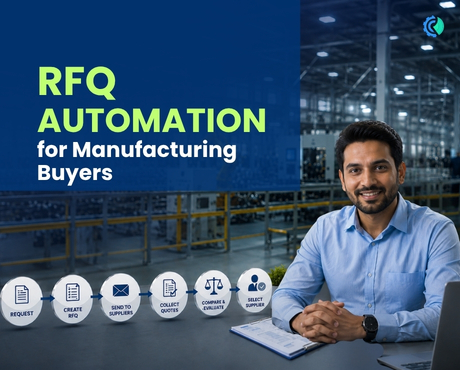
RFQ automation, for a manufacturing procurement or costing team, is software that turns internal engineering demand (a BOM, a drawing, a specification) into a structured request sent to suppliers, then compares what comes back at BOM scale and routes the result through approval to award. That’s a distinct discipline from the more commonly discussed “RFQ automation” built for the opposite side of the transaction: a manufacturer, distributor, or EMS provider automating how it responds to RFQs from its own customers, parsing inbound requests and generating quotes to win the deal.
Both are real, valuable automation. They are not the same software, and they don’t solve the same problem. Buyer-side RFQ automation starts with your own engineering data and ends in a purchase decision across your supply base. Seller-side RFQ automation starts with a customer’s incoming request and ends in a sale. A costing engineer trying to speed up comparing five supplier quotes on a stamped bracket needs the first category; most of what’s marketed simply as “RFQ automation” is built for the second. Getting that distinction right at the outset is the difference between evaluating a tool that fits your actual workflow and one built for someone else’s.
The RFQ Types a Manufacturing Buyer Actually Manages
Manufacturing procurement doesn’t run one kind of RFQ. It runs several, each with a different cost structure and a different evaluation standard, which is exactly what a generic, one-size-fits-all quote format misses.
BOM RFQs cover recurring production components tied to a bill of materials, the largest and most frequent category for most manufacturers, and the one where BOM-scale comparison and should-cost benchmarking matter most, since these are the parts bought repeatedly at volume.
Non-BOM RFQs cover one-off or irregular purchases not tied to a standard production BOM, such as spares, engineering samples, or non-recurring items, where historical pricing data is thinner, and an independent cost estimate matters even more, precisely because there’s less of a track record to lean on.
Tooling RFQs cover dies, molds, fixtures, and jigs: large, capital-intensive one-time costs that need to be evaluated alongside an amortization schedule against expected production volume, not as a simple per-unit price comparison.
Raw Material RFQs cover direct material purchases where commodity price movement is a live factor, and where should-cost benchmarking needs to reference current index data rather than a static assumption.
Capex RFQs cover capital equipment purchases, evaluated on a different basis entirely: total cost of ownership and depreciation rather than a per-part cost model.
A tool built around a single generic RFQ format handles the first category reasonably well and struggles with the rest, because tooling amortization, commodity indexing, and capital evaluation each require different underlying data, not just a different quote template.
What Buyer-Side RFQ Automation Has to Do, Mechanically
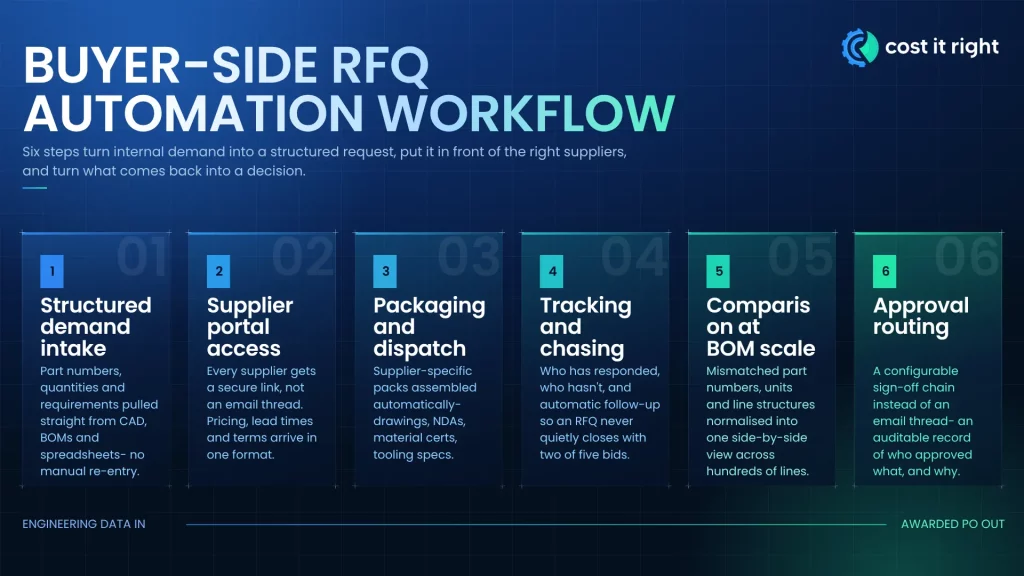
For a manufacturing buyer, RFQ automation needs to handle a specific sequence: turning internal demand into a structured request, getting it in front of the right suppliers, and turning what comes back into a decision.
Structured demand intake. The RFQ starts with engineering data (a BOM, a drawing, a specification), not a customer email. Automation here means extracting part numbers, quantities, and technical requirements from CAD files, spreadsheets, and BOMs without manual re-entry, and assembling that into a complete, standardized RFQ package. For assemblies with dozens or hundreds of line items, this step alone is where a meaningful share of manual RFQ preparation time typically goes: someone has to open the drawing, cross-reference the BOM, and rebuild that information into a supplier-ready format by hand.
Structured supplier portal access. Once an RFQ is assembled, it goes out from a central dashboard rather than as a set of individual emails. Each supplier receives a secure link to a dedicated portal, where they view the request and submit pricing, lead times, and terms directly, instead of replying through email or an attached spreadsheet that then has to be manually re-entered into a comparison sheet. Routing every supplier through the same portal, regardless of who they are, keeps every response in the same structured format from the moment it’s submitted, rather than arriving in as many different formats as there are suppliers.
Supplier-specific packaging and dispatch. Different suppliers may need different subsets of technical documentation, NDAs, or templates. Automating the assembly and dispatch of supplier-specific RFQ packs, rather than manually compiling a new set of attachments for every vendor, is where a meaningful share of manual RFQ time actually goes, particularly for components that require drawings, material certifications, or tooling specifications alongside the base request.
Response tracking and chasing. Suppliers miss deadlines. Automation that tracks who has and hasn’t responded, and follows up automatically, removes one of the more tedious manual tasks in the cycle without requiring a buyer to keep a separate spreadsheet of outstanding requests. This matters more than it sounds: a single missed follow-up can mean an RFQ closes with only two of five intended suppliers having actually responded, quietly narrowing the competitive comparison without anyone deciding that should happen.
Side-by-side comparison at BOM scale. Comparing quotes for a handful of parts is manageable by hand. Comparing quotes across a multi-hundred-line BOM, from multiple suppliers, each formatted differently, is not, and this is where most manual RFQ processes actually break down. Different suppliers rarely use matching part numbers, units, or line-item structures, so even getting quotes into a directly comparable format is nontrivial before any actual cost evaluation starts.
Structured approval routing. High-value or unusual awards need sign-off before a PO goes out. Routing the comparison and recommendation through a configurable approval chain, rather than an email thread, keeps the decision auditable, with a record of who approved what and why that a spreadsheet-and-email process typically can’t produce on demand.
The Gap Every RFQ Tool Shares: Collecting Quotes Isn’t the Same as Knowing If the Price Is Fair
Here’s the finding worth sitting with: across the current landscape of RFQ automation tools, from point solutions built specifically for supplier RFQ creation and dispatch to full enterprise sourcing suites, the shared limitation is the same. These tools are very good at collecting, standardizing, and comparing quotes. None of them tell you whether the winning quote is actually a fair price.
This isn’t a minor gap. A tool that helps you compare Supplier A’s $10.40 against Supplier B’s $9.80 has done real, valuable work, but it hasn’t told you whether either number reflects the actual cost of the material, labor, and machine time that went into the part. If every supplier responding to an RFQ pads their margin by the same percentage, a comparison tool will confidently declare a winner, and that winner can still be significantly overpriced.
That’s precisely the layer should-cost analysis adds, and it’s structurally different from RFQ comparison. RFQ comparison benchmarks suppliers against each other. Should-cost benchmarking evaluates every quote, including the “winning” one, against an independent, bottom-up model of what the part should cost, built from material, labor, machine hour rate, and overhead data, calculated without reference to any supplier’s quote at all. A manufacturing buyer using RFQ automation without should-cost benchmarking layered in can standardize and speed up a process that’s still, at its core, picking the least-bad number from a set of inflated ones.
A Worked Example: When the “Winning” Quote Still Isn’t a Fair Price
Here’s how this plays out on an actual component. Say a manufacturer sends an RFQ for a stamped steel bracket to four qualified suppliers, and the quotes come back close together:
| Supplier | Quoted Price |
|---|---|
| Supplier A | $8.40 |
| Supplier B | $8.10 |
| Supplier C | $7.95 |
| Supplier D | $8.60 |
An RFQ comparison tool does exactly what it’s supposed to do here: it identifies Supplier C at $7.95 as the winner, and on the surface, the tight spread across all four quotes looks like healthy, competitive pricing. Nothing about the comparison itself flags a problem.
Now add an independent should-cost model for that same bracket, built from the steel grade and gauge specified, the labor time and machine hour rate for the stamping process, standard scrap allowance, and overhead, calculated without reference to any of the four quotes. Say that model puts the bracket’s should-cost at $6.80.
Supplier C’s “winning” quote is roughly 17% above should-cost. So is every other supplier in the RFQ. The tight clustering that looked like competitive pricing was actually four suppliers pricing at a similar margin above the part’s true cost: a pattern RFQ comparison alone cannot detect, because it only measures suppliers against each other, never against an independent standard. This is exactly the scenario should-cost benchmarking is built to catch, and it’s also exactly the scenario every tool in the comparison above, from point RFQ solutions to enterprise sourcing suites, would report as a clean, competitive win.
RFQ Tool Categories Compared
| Category | Best For | Core Strength | What’s Missing |
|---|---|---|---|
| Seller-Side Quoting Tools | Manufacturers, distributors, and EMS providers responding to inbound customer RFQs | Fast quote generation, win-rate optimization, quote-to-cash workflows | Not built for procurement teams sourcing from suppliers at all |
| Enterprise Sourcing Suites | Large, multi-category organizations standardizing sourcing across many spend types | Broad source-to-pay coverage, reverse auctions, supplier management | Heavy implementation, often built around indirect/services spend rather than manufacturing direct materials |
| Point RFQ Creation Tools | Mid-sized manufacturers wanting to automate RFQ creation, dispatch, and tracking specifically | Fast, focused setup for the RFQ workflow itself | Compares supplier quotes to each other only, with no independent cost benchmark to validate the winning price |
| Cost It Right | Manufacturers who need RFQ automation and a defensible answer on whether the winning quote is fair | BOM-scale RFQ comparison combined with bottom-up should-cost benchmarking on every quote, including the winner | Built specifically for manufacturing direct materials and components, not general indirect spend |
The pattern across the first three categories: each solves part of the buyer-side problem well, but none combines RFQ mechanics with an independent cost benchmark. That combination is the specific gap a manufacturing procurement team is left to fill manually, usually by falling back on spreadsheet-based should-cost estimates that live outside whatever RFQ tool they’ve adopted.
How to Evaluate RFQ Automation Software for Manufacturing Procurement
Before selecting a tool, get clear answers to these questions:
- Is it actually built for the buyer side, sending RFQs and comparing supplier responses, or is it a seller-side quoting tool with manufacturing branding?
- Does it handle the full mix of channels your suppliers actually use, including email, portals, and (where relevant) WhatsApp, or only structured formats?
- Can it compare quotes at full BOM scale, across hundreds of line items, not just a handful of parts at a time?
- Does it benchmark the winning quote against an independent should-cost model, or only against the other supplier responses in the same RFQ?
- Does it integrate with your ERP for live cost and part data, or require manual cost maintenance alongside it?
- What’s the realistic implementation timeline: weeks, or a multi-quarter enterprise rollout?
Why Most RFQ Automation Content Misses the Buyer Side Entirely
Most companies publishing RFQ automation content are solving the seller’s problem, because that’s where a much larger addressable market sits: every manufacturer, distributor, and service business that responds to inbound quote requests. Content and product development naturally follow that larger market, which is exactly why buyer-side manufacturing procurement, a smaller, more specific audience, is comparatively underserved.
Where genuine buyer-side tools do exist, they’ve generally been built to solve the workflow problem: getting RFQs created, dispatched, tracked, and compared faster. That’s real, valuable automation. But it stops at comparison. None of the buyer-side tools available today extend into should-cost benchmarking, because that requires a fundamentally different kind of data and modeling: material, labor, machine hour rate, and overhead, not just faster document processing and side-by-side formatting.
That’s the specific space Cost It Right operates in: not just automating the mechanics of sending and comparing RFQs, but connecting that process to an independent cost model that tells a buyer whether the number they’re about to approve is actually a good one.
How Cost It Right Combines RFQ Automation With Should-Cost Benchmarking
Cost It Right’s RFQ module handles the buyer-side workflow directly: a dedicated vendor RFQ portal covering BOM, non-BOM, tooling, and raw material RFQ types, with detailed part information, multi-year forecast quantities, and a structured approval flow for finalizing awards. Vendor responses come back into a side-by-side comparison, at full BOM scale, not part by part.
What makes that comparison meaningful is what happens next: every incoming quote, and specifically the winning one, is benchmarked against Cost It Right’s bottom-up should-cost model for that part, built from material, labor, machine hour rate, and overhead data rather than derived from the RFQ responses themselves. This is the should-cost step that would have caught the stamped-bracket scenario in Section 5: a quote that wins the comparison because every competing bid was also priced above true cost gets flagged against the should-cost baseline instead of being waved through as the “best” option, and it flags this per RFQ type: a tooling quote gets checked against an amortization-adjusted model, a raw material quote against current commodity index data, not a single generic comparison applied uniformly. For components where supplier pricing is negotiated further, Cost It Right also supports reverse auctions tied directly to the RFQ, so price discovery and should-cost benchmarking work from the same underlying data rather than as disconnected steps.
This is the layer that turns RFQ automation from “faster, more organized comparison” into “faster comparison with a defensible answer on whether the result is actually a fair price,” which is the specific combination missing across every category of RFQ tool on the market today.
FAQs
RFQ automation for manufacturing buyers is software that turns internal engineering demand (BOMs, drawings, specifications) into structured requests for quote, distributes them to suppliers across multiple channels, tracks responses, and compares quotes side-by-side, all from the perspective of a company sourcing materials and components rather than a supplier responding to customer requests.
An RFQ asks suppliers to price a defined specification, typically used when requirements are already clear and price is the primary decision factor. An RFP requests a proposed solution when requirements are broader or more open-ended. An RFI gathers early market and capability information before either. Manufacturing procurement for defined parts and components is most often an RFQ process.
Buyer-side RFQ automation handles a company sending requests to its own supplier base and comparing what comes back, using internal engineering data as the starting point. Seller-side RFQ automation (often marketed simply as “RFQ automation” or “quote automation”) handles a manufacturer, distributor, or service provider responding to inbound requests from its own customers. The two solve fundamentally different workflows despite similar terminology.
Generally, no. Most RFQ automation software compares supplier quotes against each other, which identifies the lowest or most competitive bid within that specific RFQ, but doesn’t independently verify that the winning price reflects a fair cost structure. That requires should-cost benchmarking, an independent, bottom-up cost model built from material, labor, machine, and overhead data, layered on top of the RFQ comparison itself.
Point solutions focused specifically on the RFQ workflow can often be implemented in a matter of weeks. Full enterprise sourcing suites that bundle RFQ automation with broader source-to-pay functionality typically take significantly longer, often multiple quarters, given the scope of configuration involved.
This varies significantly by tool. Comparing a handful of quotes manually is manageable, but comparing supplier responses across a multi-hundred-line BOM is where manual processes reliably break down, and it’s a meaningful differentiator between basic quote-comparison tools and platforms built for BOM-scale manufacturing procurement specifically.
They need different handling. Tooling RFQs involve large one-time costs that should be evaluated against an amortization schedule tied to expected production volume, not compared as a simple per-unit price. Raw material RFQs need current commodity index data factored into the should-cost comparison, since material prices move independently of any single supplier’s quote. A generic RFQ format built around standard production parts typically doesn’t account for either.