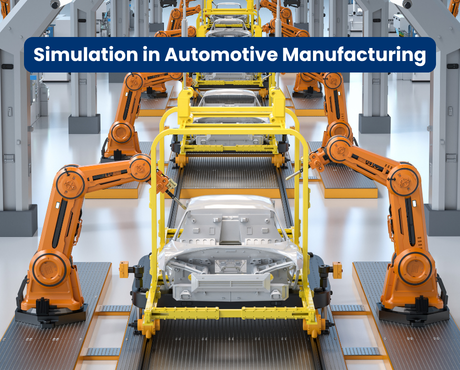
Automotive manufacturing is entering a new phase, one where decisions can no longer rely on past data or intuition alone.
Rising cost pressure, supply chain volatility, and faster RFQ cycles are forcing manufacturers to rethink how decisions are made. In this environment, even a small mistake in sourcing, costing, or production planning can directly impact margins.
This is where simulation-driven decision making is transforming automotive manufacturing.
Instead of reacting to outcomes, manufacturers can now simulate multiple scenarios, evaluate cost impact, and choose the best path before execution.
What is Simulation-Driven Decision Making
Simulation-driven decision making is the process of using data, cost models, and scenario analysis to evaluate outcomes before taking action.
It enables teams to:
- Compare multiple options
- Predict cost and operational impact
- Reduce uncertainty in decision making
Instead of asking what happened, teams can evaluate what will happen if a specific decision is made.
Why Automotive Manufacturers Are Adopting Simulation
1. Cost volatility is increasing
Material costs, logistics expenses, and supplier pricing are constantly changing.
Without simulation:
decisions rely on assumptions
hidden costs appear later
With simulation:
cost impact is visible before decisions are finalized
2. Supply chains are complex and interconnected
Automotive manufacturing depends on multiple suppliers across tiers.
A single decision can affect:
lead times
cost structures
production schedules
Simulation helps evaluate these dependencies before committing.
3. Faster RFQ and sourcing cycles
RFQs require quick yet accurate responses.
Manual costing and comparison slow down the process.
Simulation allows:
rapid scenario comparison
more competitive and accurate quotes
faster decision-making
4. Shift toward proactive decision making
Traditional systems focus on reporting and analysis after events occur.
Simulation-driven systems:
predict outcomes
identify risks early
guide decisions proactively
Traditional vs Simulation-Driven Decision Making
| Traditional Decision Making | Simulation-Driven Decision Making |
|---|---|
| Based on historical data | Based on future scenarios |
| Manual analysis | Automated scenario evaluation |
| Limited cost visibility | Full cost and impact visibility |
| Reactive approach | Proactive decision-making |
| Single-option evaluation | Multi-scenario comparison |
| Higher risk | Reduced uncertainty |
Where Simulation is Creating Impact
1. RFQ and Quotation
Teams can simulate:
- multiple costing scenarios
- supplier options
- margin impact
This leads to more accurate and competitive quotations.
2. Supplier Selection
Instead of choosing based only on price, simulation enables evaluation of:
- total cost
- delivery risks
- long-term supplier impact
3. Engineering Changes
Before implementing changes, manufacturers can simulate:
- cost impact
- production feasibility
- timeline changes
4. Cost Optimization
Simulation helps test:
- alternative materials
- different processes
- sourcing strategies
This ensures decisions are based on overall efficiency, not isolated factors.
What Enables Effective Simulation
1. Integrated data
Data from engineering, procurement, and production must be connected.
2. Accurate cost models
Without cost visibility, simulation results are incomplete.
3. Scenario modeling capability
Teams need to:
- Compare multiple options
- evaluate trade-offs
- simulate real-world conditions
4. Decision workflows
Simulation must be integrated into actual decision processes-not used in isolation.
Conclusion
Simulation-driven decision making is redefining how automotive manufacturers operate.
It enables organizations to:
- reduce cost risks
- improve decision accuracy
- respond faster to changing conditions
In a highly competitive and uncertain environment, the ability to simulate outcomes before acting is becoming essential.
The shift is clear:
From static analysis → to dynamic simulation
From reactive decisions → to predictive decision-making
FAQ
It is the use of data and scenario modeling to evaluate outcomes before making decisions in sourcing, costing, and production.
It helps predict cost, risk, and operational impact before decisions are executed.
Traditional analysis focuses on past data, while simulation evaluates future scenarios and outcomes.
It is used in RFQ processes, supplier selection, engineering changes, and cost optimization.