

How did an auto component maker standardize costing across 73 plants?
Last updated:
At a glance
A leading auto component manufacturer with 73 plants in more than 8 countries replaced manual costing with Cost It Right (CIR) by Softude.
CIR standardized and centralized the existing and historical costing data of all 73 plants on a single platform, with a system-driven RFQ process and digitized approvals.
The end-to-end costing process now takes 60% less time, and raw material amendments take under 3 minutes.
Who this case study is for: For costing heads, cost engineers, plant controllers, purchase and sourcing teams, IT leaders and CXOs at multi-plant auto component makers, Tier 1 and Tier 2 suppliers and other discrete manufacturers.
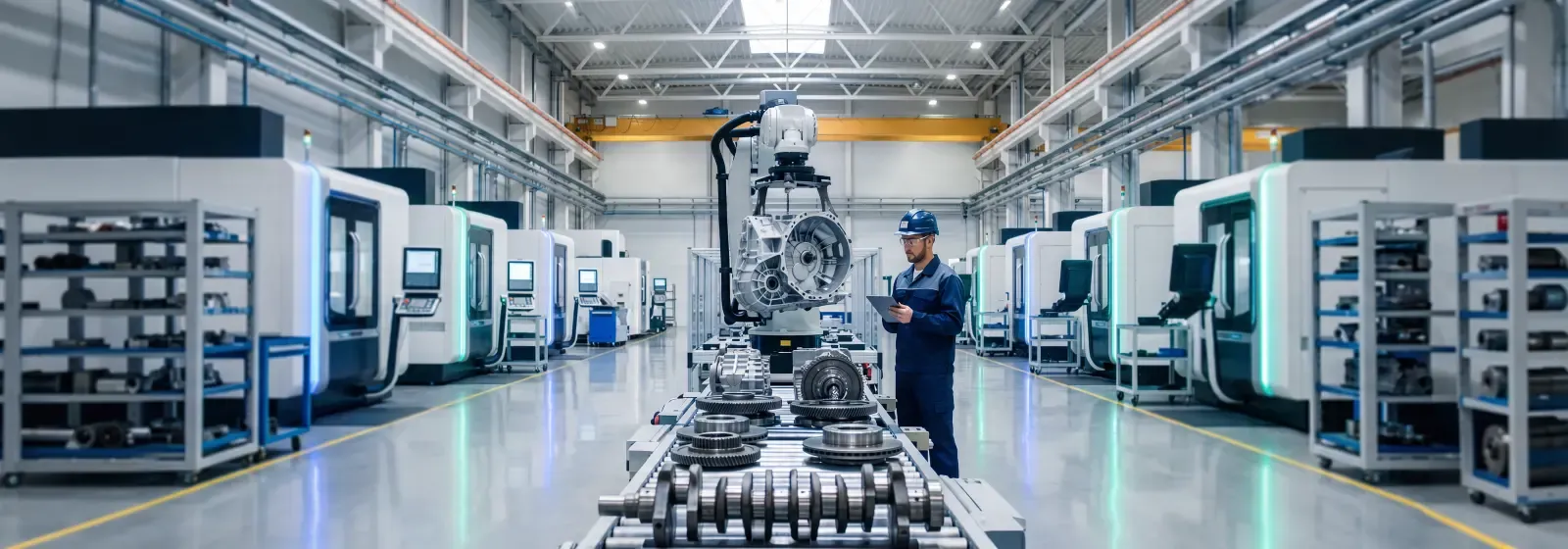
- 60% Less time in the end-to-end costing process
- 73 Plants on one costing platform
- Under 3 min Raw material (RM) amendments
- 100% Digitized hierarchy-based approvals
The context
Client and industry
The client is one of the world's leading developers, manufacturers and suppliers of diverse auto parts.
With more than six decades in the industry, the group supplies proprietary automotive solutions to OEMs across the globe. Costing at that scale means thousands of parts, many plants and a large supplier base, all of which have to be priced consistently.
- Industry: automotive, auto components
- Footprint: 73 manufacturing plants in more than 8 countries
- Research: more than 30 R&D centres worldwide
- Customers: OEMs across the globe
- Onboarded Cost It Right: second quarter of 2021
The problem
The challenge
All 73 manufacturing plants followed a manual costing process, with no standard format and no central record.
Without an automated costing solution, costing data was neither standardized nor centralized across the plants. Each plant worked from its own Excel sheets and emails. That limited visibility when shortlisting suppliers and optimizing costs, and made it hard to keep confidential costing data secure.
The gaps compounded. Reviewing many spreadsheets for every change invited human omissions, bought-out parts were sourced through a manual RFQ process, and price changes were keyed into the ERP by hand. Read more on why standardized cost data matters.
Why existing methods fell short
Spreadsheets, emails and manual ERP updates could not keep 73 plants consistent, and the gaps showed up in seven ways:
- Undue wastage of time and manpower managing unorganized data in Excel sheets and emails
- No detailed cost breakups, so cost leaks went unidentified
- No insightful, actionable reports, because costing data was not standardized or centralized
- Losses from human omissions while reviewing multiple Excel sheets for changes
- Unjustifiable, non-competitive supplier costs from a manual RFQ process for bought-out parts (BOPs)
- Data and knowledge loss when employees left
- More errors from manual updates of price change data in the ERP
The turning pointCost It Right (CIR)
The solution
How Cost It Right solved it
Cost It Right (CIR) by Softude deployed its full costing estimation and management solution and integrated it with the client's existing systems.
With CIR, the client standardized organization-wide costing data on one centralized platform. The company onboarded Cost It Right in the second quarter of 2021.
- A system-driven, transparent RFQ process for bought-out parts
- Digital cost cards with detailed cost breakups
- A digitized, hierarchy-based approval process with deviation highlights and full system records
- Automated reports
- Automated data updates to the ERP and other software on specific approvals
- Raw material (RM) amendments in under 3 minutes
Rollout: the client onboarded CIR in the second quarter of 2021, integrated it with its existing systems and moved the existing and historical costing data of all 73 plants onto the platform.
How standardization protected confidential costing data: before CIR, cost sheets moved between plants and teams as Excel files and emails, which made confidential costing data hard to protect. In CIR, costing data sits on one platform, approvals follow a digitized hierarchy with deviation highlights, and every step leaves a thorough system record. That reduces the risk of a data breach and keeps a full audit trail.
Problem, CIR capability and result
| Problem | CIR capability used | Result |
|---|---|---|
| Time and manpower lost managing Excel sheets and emails | Centralized costing data, workflow automation | 60% less time in the end-to-end costing process |
| No detailed cost breakups, unidentified cost leaks | Digital cost cards | Detailed cost breakups that removed unidentified cost leaks |
| No actionable reports | Reports and dashboards | Automated reports that reduced manual labour and assumption-based decisions |
| Losses from human omissions across Excel sheets | Product cost estimation in one standard system | Manual errors and hidden cost disparities avoided |
| Non-competitive supplier costs from a manual RFQ for BOPs | RFQ and sourcing management | A system-driven, transparent RFQ process |
| Knowledge loss when employees left | Centralized costing data | Existing and historical data of 73 plants 100% standardized on one platform |
| Errors from manual ERP price updates | ERP integration, RM price amendments | Automated ERP updates on approval and RM amendments in under 3 minutes |
The impact
Results and business impact
The end-to-end costing process takes 60% less time, and costing data from all 73 plants now sits on a single platform.
| Measure | Before | After |
|---|---|---|
| End-to-end costing process | Manual costing in every plant | 60% less time |
| RM amendments | Price change data updated in the ERP by hand | Under 3 minutes |
| Approval process | Handled over Excel sheets and emails | 100% digitized, hierarchy-based, with deviation highlights |
| Costing data | Excel files in each of the 73 plants | One standard platform for current and historical data |
- 100% automated, process-driven costing, data management and centralization
- Digital cost cards with detailed cost breakups removed unidentified cost leaks
- Automated reports reduced manual labour and assumption-based decisions
- Automated ERP updates on specific approvals ended manual price entry
The insights helped the client reduce operational costs and work more efficiently, which marked a significant increase in profits. The client also avoided manual errors and hidden cost disparities that could cause large losses over time.
Key takeaways
- Manual costing across many plants breaks down fast: one standard platform for current and historical data fixes visibility.
- A system-driven RFQ process for bought-out parts tackles non-competitive supplier costs.
- Digital cost cards with detailed breakups expose cost leaks that spreadsheets hide.
- Hierarchy-based digital approvals with system records protect confidential costing data.
Your playbook
How to replicate this
- 1. Agree one standard costing format for every plant
- 2. Move existing and historical costing data from Excel onto one platform
- 3. Use digital cost cards with detailed cost breakups for every part
- 4. Run bought-out part RFQs through a system-driven, transparent process
- 5. Digitize hierarchy-based approvals with deviation highlights and system records
- 6. Connect the ERP so approved prices and RM amendments update automatically
Under the hood
Cost It Right capabilities
Used in this case study
The full story
See the full case study in detail
Get the complete case study as a PDF. Enter your work email and it opens straight away.
Keep reading
Related case studies
From the blog
Related reading
- ArticleImpact of Cost Data Standardization on Your BusinessCost data standardization is a critical aspect of business operations that often goes overlooked. In today’s fast-paced and data-driven world, having consistent and standardized cost data is essential for driving growth and performance. %Read the article
- ArticleEnhancing Estimating and RFQ Processes for ManufacturersEnhance your manufacturing processes with our expert tips for optimizing estimating and RFQ processes. From automation to data analysis, our resources provide valuable insights and practical advice to help you streamline your operations and drive growth.Read the article
- ArticleWhy Cost Estimation Matters in Automotive ManufacturingLearn how accurate cost estimation boosts profitability and competitive pricing in automotive manufacturing. Explore key strategies and software solutions.Read the article
Good to know
Frequently asked questions
Agree one costing format, move every plant's current and historical data onto one platform, and run costing, RFQs and approvals through the same process. This client did that for 73 plants with Cost It Right (CIR) by Softude and cut end-to-end costing time by 60%.
A digital cost card is a structured record of a part's cost, broken down into elements such as material, process, labour, overheads and margin, kept in a costing system instead of a spreadsheet. In CIR, cost cards with detailed breakups helped this client remove unidentified cost leaks.
Suppliers quote through one structured process, so quotations are comparable and negotiations rest on data rather than emails and spreadsheets. For this client, a manual RFQ process for BOPs had led to unjustifiable, non-competitive supplier costs, and CIR replaced it with a system-driven, transparent RFQ process.
The client cut the time of its end-to-end costing process by 60%, with a system-driven and transparent RFQ process in Cost It Right.
All 73 manufacturing plants. Their existing and historical costing data is 100% standardized and centralized on a single platform.
Raw material (RM) amendments take under 3 minutes.
Time lost managing data in Excel sheets and emails, unidentified cost leaks, no actionable reports, losses from human omissions, non-competitive supplier costs from a manual RFQ process, knowledge loss through attrition and errors in manual ERP price updates.
The client onboarded Cost It Right in the second quarter of 2021.