Table of Contents
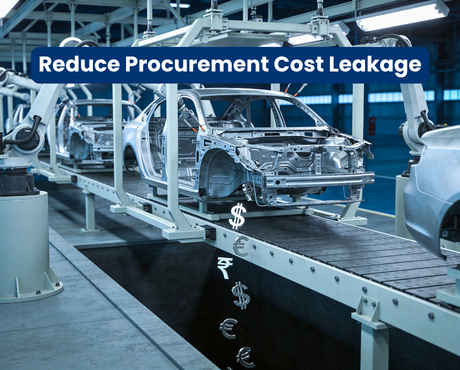
Manufacturers don’t lose money only because suppliers increase prices.
They lose money because procurement decisions are often made without full cost visibility.
In most organizations, procurement cost leakage is treated as a contract or spend problem.
In reality, it starts much earlier during RFQ comparison, supplier selection, cost approval, and negotiation.
By the time the purchase order is created, the leakage has already happened.
The challenge is not just reducing cost.
The challenge is preventing hidden cost leakage before decisions are finalized.
What is Procurement Cost Leakage?
Procurement cost leakage is the hidden loss of money that occurs when negotiated prices, supplier quotes, contract terms, or cost assumptions do not match the actual cost paid by the manufacturer.
It is often:
- unnoticed
- untracked
- and preventable
For manufacturers, cost leakage happens across the entire procurement lifecycle from RFQ to final payment.
How Manufacturers Can Reduce Procurement Cost Leakage
1. Standardize RFQ and supplier quotes
Ensure all vendors quote in the same format with the same cost heads.
2. Compare total cost, not just unit price
Include:
- material cost
- conversion cost
- packaging
- freight
- tooling
- overhead
- rejection
3. Use should-cost benchmarks
Define a target cost before negotiation.
This helps identify inflated or incomplete supplier quotes.
4. Track historical cost changes
Maintain visibility on:
- past pricing
- supplier revisions
- cost trends
5. Eliminate maverick spending
Ensure all purchases go through approved workflows and suppliers.
6. Strengthen contract compliance
Track whether agreed pricing, terms, and obligations are followed.
7. Automate invoice and PO matching
Use 3-way matching to prevent overpayments and mismatches.
8. Simulate cost impact before approval
Every decision should answer:
What is the impact on the final product cost if this is approved?
9. Connect procurement and costing data
Decisions should not happen in isolation.
Costing, procurement, and supplier data must work together.
Where Cost Leakage Actually Starts
Procurement cost leakage does not begin after contracts are signed.
It begins at the decision stage.
RFQ stage
- Vendor quotes come in different formats
- Key cost elements are missing
- Comparison becomes inaccurate
Supplier selection stage
- Decisions are based on lowest quoted price
- Total cost is not evaluated
Negotiation stage
- No clear cost benchmark
- Supplier pricing is not challenged effectively
Approval stage
- Decisions are approved without understanding cost impact
- No simulation of outcomes
Post-award stage
- Contract terms are not fully enforced
- Price changes are not tracked
The Hidden Cost Leakage Points Manufacturers Miss
Most procurement leakage is not visible in reports. It hides in small gaps.
- Incomplete vendor quotes (missing freight, packaging, tooling)
- Non-standard RFQ formats
- Comparing unequal supplier quotes
- Lack of should-cost benchmarks
- No visibility into historical pricing
- Ignoring overhead, rejection, and process costs
- No product-level cost impact view
- Price revisions not tracked properly
The lowest supplier quote is not always the lowest cost.
Why Traditional Procurement Cost Reduction Falls Short
Most strategies focus on reducing spend, not preventing leakage.
- Contract renegotiation helps, but only after leakage happens
- Spend analysis shows past issues, not future risks
- Dashboards provide visibility, not decision guidance
- Supplier consolidation improves leverage, but not cost accuracy
Cost reduction is reactive.
Cost leakage control must be proactive.
The Cost Leakage Control Framework
Manufacturers can control leakage using a structured approach:
- Visibility – unify procurement and cost data
- Standardization – align RFQ and supplier formats
- Benchmarking – use should-cost models
- Simulation – evaluate scenarios before decisions
- Control – enforce approvals and compliance
- Continuous tracking – monitor supplier and cost changes
Role of Technology
Modern procurement teams reduce cost leakage by using connected systems that:
- centralize RFQs
- standardize supplier data
- compare quotes accurately
- track contract compliance
- detect anomalies and price changes
- simulate cost impact before decisions
Platforms like Cost It Right enable manufacturers to connect costing, procurement, RFQ analysis, and supplier decision-making into one workflow, ensuring better cost control.
Conclusion
Procurement cost leakage is not just a pricing issue.
It is a decision-making issue.
Manufacturers that focus only on cost reduction will continue to lose value.
Those that focus on cost visibility, structured comparison, and decision intelligence will prevent leakage before it happens.
The shift is clear:
From reducing spend → to controlling decisions
From reacting to cost → to predicting cost impact
FAQ
What is procurement cost leakage?
Procurement cost leakage is the hidden loss of money when supplier pricing, contract terms, or decisions do not match actual procurement spend.Where does cost leakage happen in procurement?
It occurs during RFQ comparison, supplier selection, contract compliance, maverick spending, and approval workflows.- How can manufacturers reduce procurement cost leakage?
By standardizing RFQs, comparing total cost, using should-cost benchmarks, enforcing contract terms, eliminating maverick spending, and simulating cost impact. - Why is RFQ standardization important?
It ensures accurate comparison between suppliers and prevents selecting incomplete or misleading quotes. - What is the difference between cost reduction and cost leakage control?
Cost reduction lowers spend. Cost leakage control prevents hidden losses before and after procurement decisions.