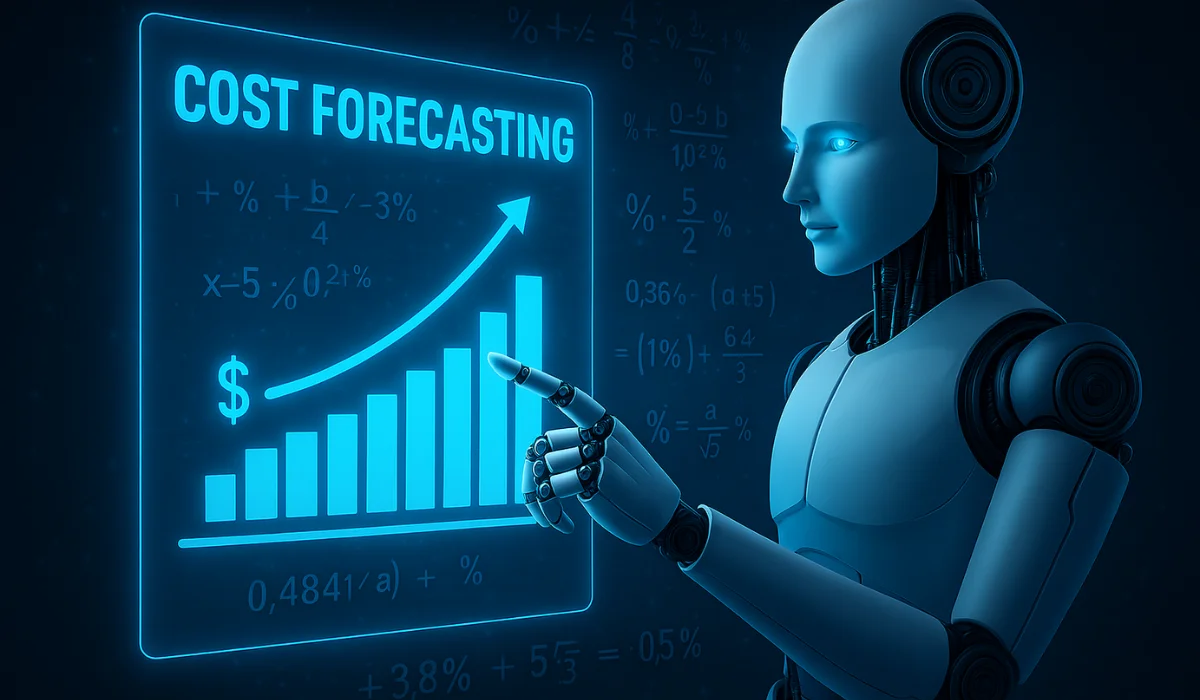
AI cost forecasting is a modern approach to predicting future costs for operations, materials, and labor using machine learning (ML) algorithms. It goes way beyond simple math by using smart models that can find and measure thousands of different, hard-to-track factors all at once.
Key Abilities and Data It Uses
Unlike older models that only looked back at company numbers, AI models look at a complete, wide view of reality:
- Past Data: Detailed checks of previous production runs, supplier bills, labor hours, and repair costs are already stored in the ERP.
- Market Trends: Adding outside factors like future prices for raw materials, global shipping costs, energy market ups and downs, and even big economic signs (like inflation).
- Live Information: Using sensor data from the factory floor (IoT), such as how fast machines are running, how much waste is made, and production times, to immediately feed real conditions into the prediction model.
The main advantage over manual guessing is the AI’s ability to learn and adjust. A traditional model might only predict costs based on the average of the last year. An AI model, however, can figure out that a 15% jump in one specific material often leads to a 4% increase in machine repair costs 60 days later.
This deep connection allows the manufacturer to act early and make much more accurate predictive analytics. This changes budgeting from a yearly paperwork event into a dynamic, real-time function.

Before we talk about connecting AI, we must know how important the ERP system is. A manufacturing ERP is like the nervous system of the company. It’s the single source of truth for all crucial business activities.
Core tasks the ERP handles include:
- Inventory: Tracking materials and finished products.
- Production: Planning what to make, when, and with what resources.
- Finance: Handling all money matters, bills paid, and bills owed.
- Supply Chain: Managing the buying of materials and moving them around.
The ERP system makes the business run smoothly because it standardizes how things are done and connects data across all departments. Without a strong ERP, cost data is everywhere and fragmented, making good forecasting impossible. This is why the ERP is the perfect place to put the AI.
Also Read: Why Predictive Forecasting is Crucial for Effective Manufacturing Budgeting
Integrating advanced AI cost forecasting abilities directly into the manufacturing ERP platform is the next great step for managing factory operations and finance. This combination creates value that separate systems cannot achieve.
1. One Data Source for Better Decisions
The strongest reason for integration is having one place for all data. The AI needs detailed business data (like lists of parts, work orders, and purchase history). This data lives only in the ERP. Connecting the AI lets it constantly pull, analyze, and improve this live data without manual steps or errors. This ensures the prediction engine is always using the freshest, most accurate information.
2. Live Cost Predictions Inside Daily Work
Integration turns smart predictions into actions exactly when decisions are being made:
- In Buying: When a buyer starts a purchase order in the ERP, the integrated AI can instantly warn if the supplier’s price, plus shipping and future tariffs, will cost too much for the final product.
- In Production: When a manager schedules a new batch, the system can instantly calculate the real-time cost of using a cheaper material or working overtime, showing the cost difference immediately.
- In Finance: Budget leaders get constant, live forecasts. This stops the need for time-consuming monthly checks and allows for continuous, dynamic budget optimization.
The direct business benefit is huge: significantly fewer surprise budget overruns, lower inventory costs (because demand is predicted better), and far smarter use of resources everywhere.
Also Read: ERP Vs Costing Tools: What Manufacturers Should Choose

Successful integration of AI in ERP is less about buying new apps and more about building a reliable, two-way data connection. The technical plan focuses on three key parts: data setup, connection type, and where the system runs.
Get the right data
The AI model is only as good as the data it gets. The ERP must provide clean, organized, and deep historical datasets. This means:
- Detailed Cost Parts: Breaking costs down by specific material, labor type, machine time, and overhead fees.
- Consistent Timing: Making sure all data has a timestamp and matches across all sections (e.g., purchase dates match production dates).
- Outside Data Links: The ERP must be set up to pull in and match outside data (market prices, weather) to the internal costs they affect.
Decide integration method
Two main ways allow data to flow smoothly:
API-Based Connections (Middleware): This is the most common way. It uses strong Application Programming Interfaces (APIs). The ERP sends the data, and a separate AI platform (often a cloud service) runs the models. It then sends the final forecasts back into the ERP system. This setup offers flexibility.
Embedded AI Modules: Some new ERP systems have native machine learning engines built right into their core. This lets the AI model run directly against the ERP’s main database, making the process faster and simplifying external connections. This offers truly real-time cost predictions visible right in the user screen.
Choose Location Site
The choice of where the system lives affects integration:
Cloud ERP: Integration is usually faster and easier, as it uses native cloud-based services to handle the intense computing power the AI models need.
Local (On-Premise) ERP: Needs a more complex, specialized data connection and strong internal computing power (servers) to handle the model training locally. Companies often need to update their internal data structure first.

The combined strength of a powerful ERP and smart AI cost forecasting system brings major, measurable benefits to the entire manufacturing business.
1. Better Accuracy and Quickness
AI models commonly improve forecasting accuracy by 20-40% compared to older methods. This precision means you need less extra cash set aside for unexpected costs, freeing up money to grow the business. Also, the system is so quick it can re-forecast instantly if a big event happens (like a supplier failing to deliver), allowing for immediate, confident fixes that protect profits and delivery schedules.
2. Smarter Budgeting and Resource Use
By providing a constant, rolling forecast that shows cost differences weeks or months ahead, the AI-integrated ERP allows for smart resource movement. Finance teams can move away from rigid, calendar-based budgets and adopt flexible budgets that change based on what the market and factory are actually doing. This makes sure money, people, and machine time are always used for the most important activities.
3. Test Scenarios and Reduce Risk
The integrated system becomes a powerful tool for reducing risk. Operations teams can run complex tests right inside the ERP. Scenario planning might include modeling the cost impact of a new trade tax, a big jump in fuel prices, or a sudden delay from a critical vendor. This lets managers prepare for problems early and test how tough the company is financially before the risks even happen.
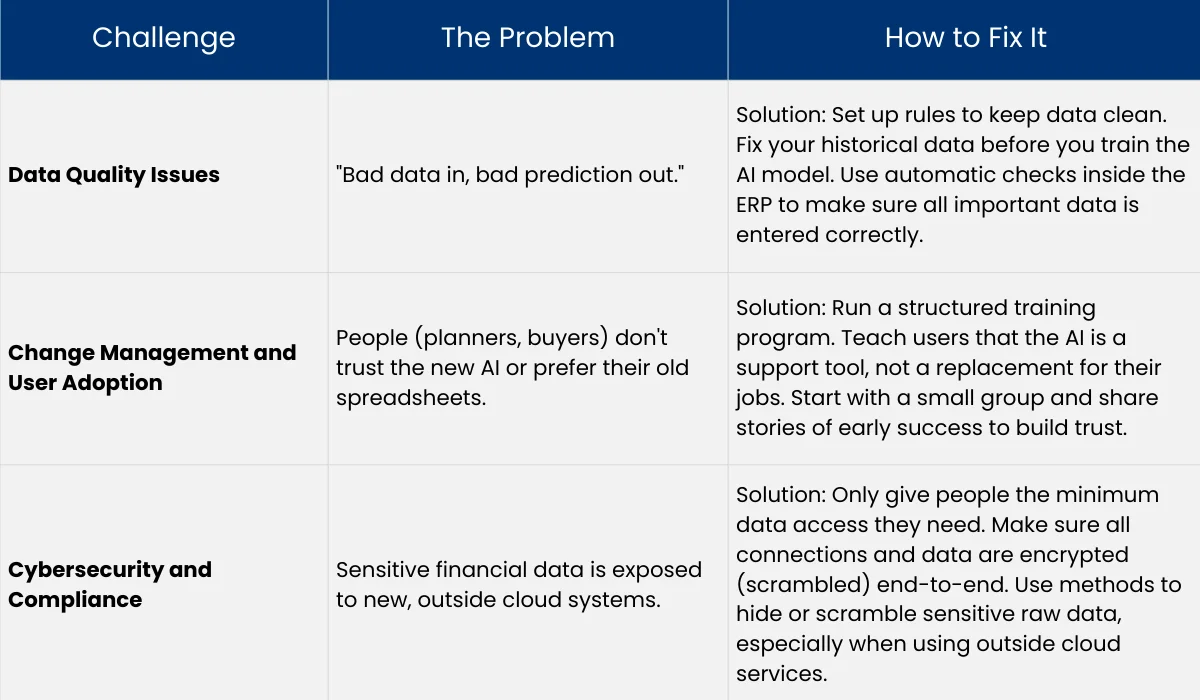
While the benefits are huge, putting AI cost forecasting into the ERP has challenges. You must deal with these three issues early on.